Prevent escape of water
LeakNet flow meters and smart valves catch abnormal flow from pipework, risers and appliances - and shut off the supply where configured.
Tector watches moisture in the structure. Pipe leaks are the other water risk - and our partner Quensus stops them at the source: LeakNet meters the supply, detects abnormal flow and shuts off the water automatically. One scope covers both.
Discuss your project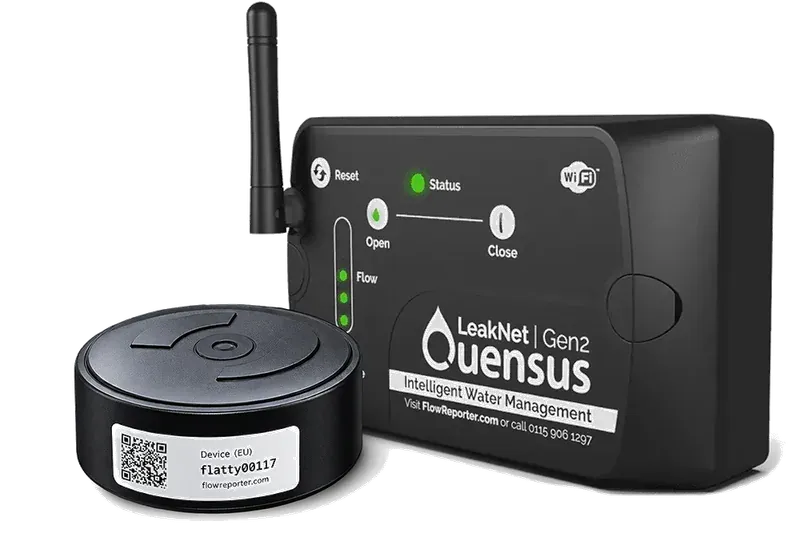
LeakNet flow meters and smart valves catch abnormal flow from pipework, risers and appliances - and shut off the supply where configured.
FlowReporter tracks consumption in real time and sends alerts to the right people - leaks, waste and usage in one view.
Tector’s embedded sensors follow drying in CLT panels and watch for ingress beneath flat-roof membranes.
A pipe leak shows up as abnormal flow on a meter. Moisture trapped in a CLT panel or under a roof membrane never does - and a sensor embedded in the structure cannot see a burst pipe behind a riser. Covering a building against water damage takes both principles, from construction into operation.
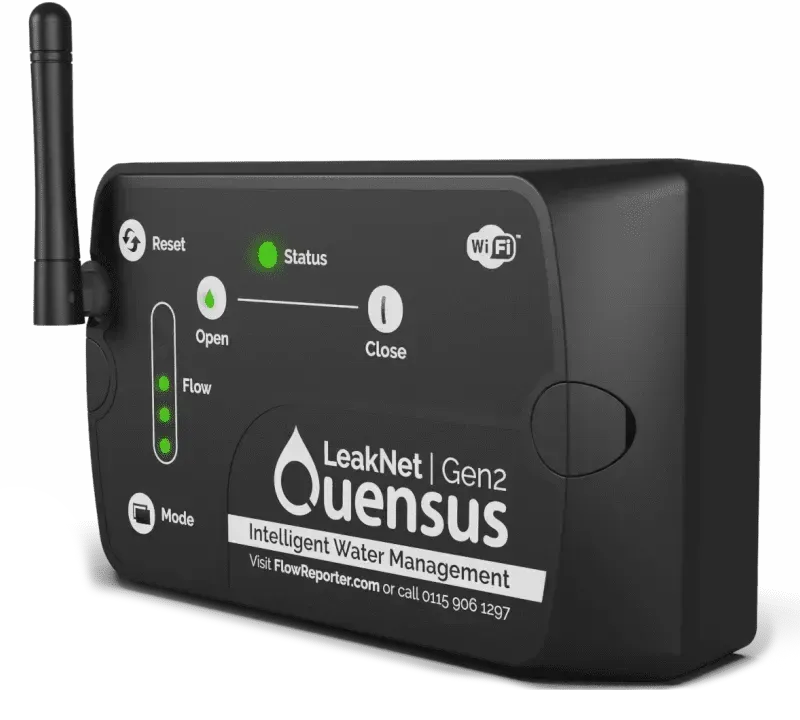
LeakNet meters the incoming water supply, learns normal usage, alerts on abnormal flow and can shut off the water automatically through smart valves.
Watch standpipes and temporary site supplies while the building is still being fitted out.
Catch tenant leaks, appliance failures and burst pipes as abnormal flow, and shut off the supply automatically where configured.
Wireless sensors inside the structure track wood moisture content, temperature and relative humidity continuously.
Follow drying in the panels from erection through enclosure, and keep watching for elevated moisture once the building is in use.
Detect water beneath the membrane and localise it on the roof plan, continuously between inspections.
How does water damage actually split between pipe leaks and water from outside? The insurers’ claim statistics do not give one tidy number - each series measures its own market, population and years - but they are clear about the shape of the risk:
No single series captures both risks cleanly - they measure different populations in different years. Together they still say enough: pipe systems and other sources inside the building produce a steady, high volume of claims, water from outside produces a substantial share that spikes in wet years, and a building is only covered against water damage when both are watched.

Escape of water and envelope moisture are usually handled by different suppliers, scoped at different times and discovered by different people. That is how coverage gaps appear.
Only concerned about pipe leaks? Then Quensus is the right first call - request a quote at quensus.com. If moisture in the roof or timber structure is on your risk list, start with the form below.
Want LeakNet scoped for your project? Discuss your project with us, or explore the system at quensus.com.
WRAS-approved smart valves close the supply the moment flow looks wrong - remotely or automatically, configured to your building.
LeakNet learns the building’s consumption pattern and alerts on abnormal flow, so an alarm means something is actually wrong.
Consumption tracking shows where water goes - Quensus reports customers reducing water bills by up to 60 per cent.
Quensus reports escape-of-water claims cut by over 80 per cent, and partners with UK insurers including Aviva.
Protects standpipes and temporary supplies during construction, then risers, plant rooms and washrooms in operation.
Pair LeakNet with Tector’s embedded sensors so the supply and the structure are covered together.
Planning: agree the flow-protection scope and moisture-sensor coverage before work starts.
Construction: watch temporary site supplies; follow drying and roof conditions.
Handover: live leak protection and a documented moisture history from day one of operation.
In operation: abnormal flow is stopped at the valve, and alerts reach the right people.
LeakNet meters the building’s incoming water supply, learns what normal usage looks like, and alerts on abnormal flow. Where smart valves are fitted, it shuts the water off automatically. Splash sensors and leak cable extend detection to spots where water pools, and FlowReporter delivers consumption reporting and alerts.
They see different risks. A flow meter detects escape of water from the supply side - pipework, risers, appliances - but nothing about the building envelope. Embedded moisture sensors detect water in the structure - rain under a membrane, construction moisture in a panel - but nothing about the pipes. Most CLT and flat-roof programmes carry both risks from construction into occupation.
Yes. It can watch standpipes and temporary site supplies while the building is being fitted out, and the same system then protects the finished building in operation - so the protection does not stop at handover.
Quensus scopes and delivers LeakNet; Tector scopes and delivers the moisture monitoring. You can start with either company - we coordinate directly so your project is scoped once, with each system delivered and supported by its specialist.
Then go straight to Quensus: their team quotes and delivers LeakNet independently of Tector. You can request a quote at quensus.com.
A few questions from the Quensus quote questionnaire, simplified. We pass your enquiry to Quensus for the LeakNet quote - and include Tector moisture monitoring in the scope if you want the structure covered too.
Our experts handle every enquiry personally.